Sushi is one of the most famous and well-known dishes on the planet. When people think of Japanese cuisine, they usually think of sushi. This dish comes with a rich history in Japanese culture and has been adopted into regular diets across the world in countries like the United States of America. Sushi is traditionally made with few ingredients, almost always containing rice, raw fish or vegetables.
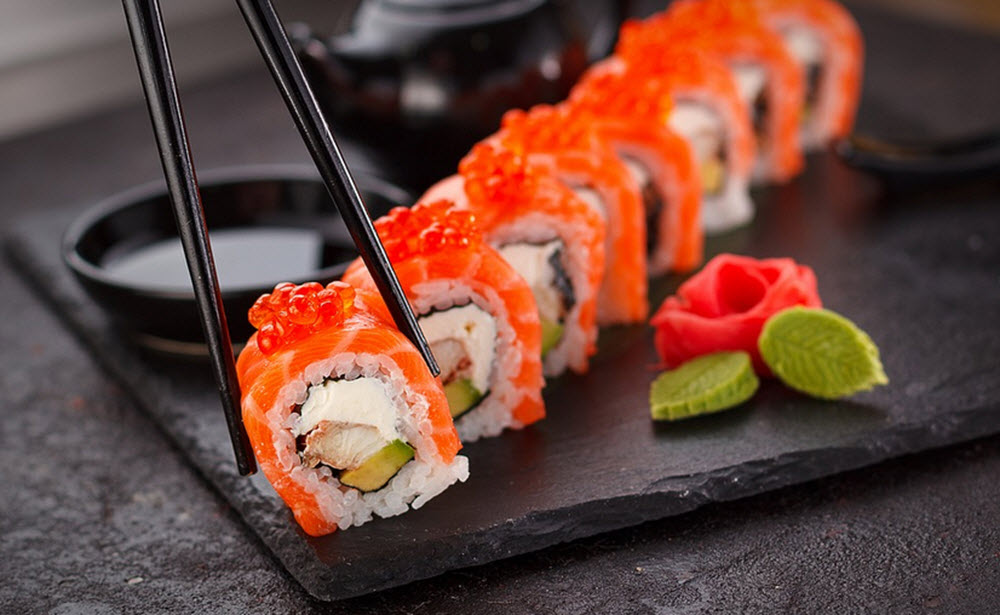
Raw Fish Right?
Unless you ask a full-on foodie, a Japanese culture enthusiast, or a Japanese person, the answer you are going to get to the question ‘What is sushi?’ is raw fish. Especially in the west majority of the people consider sushi to be Japanese for raw fish, when in fact it has two separate meanings:
- Historic Meaning: Pickled fish preserved in rice and vinegar
- Current Meaning: A dish containing rice prepared with sushi vinegar
So, while we think the raw fish on top or in the middle is what makes the sushi, in fact, it is the rice and vinegar combined with a piece(s) of raw vegetable or raw fish which in Japanese means Sashimi. Sashimi the dish is widely referred to incorrectly as sushi, but since it does not have rice, it is not officially considered to be sushi.
There are still a wide variety of different and unique sushi dishes we will cover in this article, ranging from the commonly known Maki Sushi or Makizushi and Nigirizuhi to the more unknown Chirashizushi and Inarizushi.
Types of Sushi
Sushi is an interesting dish originated in Japan. Several types of sushi found in Japan are not found anywhere else. At the same time, there are types of sushi outside of Japan that you would not generally see in Japan, like the inside out roles. Enjoy this list of the most popular sushi types and become more familiar with the types of sushi and how they differ.
- Makizushi: also known as “norimaki” is the type of sushi where rice and other ingredients are tightly rolled in a sheet of nori seaweed.
- Nigirizushi: or Nigiri is the original form of sushi we widely accept today. Made of a hand-pressed rice cylinder usually topped with ingredients like a raw piece of tuna.
- Oshizushi: “pressed sushi” is made in a “oshiwaku” box giving it the rectangular shape. Commonly served in neat triangles, rectangles or squares.
- Chirashizushi: translated as “scattered sushi” is a bowl of sushi rice topped with any variety of ingredients.
- Narezushi: is regarded as the original form of sushi. The dish uses fish preserved for several months to years in rice and salt. After fermentation rice is discarded and fish is consumed.
- Inarizushi: sticks out among other types of sushi, because of its sweet flavour, and appearance and because it doesn’t contain any fish. A pouch of deep-fried tofu filled with sushi rice.
There are many more types of sushi worth checking out when in Japan, and we recommend you definitely give them a try if you ever get a chance. Paired with the perfect burn of the wasabi, you cannot go wrong with any of the choices above.
Sushi has a history in Japan dating back to the fourth century and has been spreading around the planet since the 1800s. The western influence and creations like the California Roll, Dynamite Roll and Spicy Tuna Rolls added a different flavour to the vast history of sushi. These types of western roles are not easy to find in Japan, where they stick to the original, historic forms of sushi. You know the saying, if it is not broke, don’t fix it.
Guide to Sushi Fish (Neta): Flavor Profiles & Textures
Traditional classifications, culinary preparations, seasonal peaks, and tasting notes
| Japanese / English Name | Classification | Texture & Fat Level | Flavor Profile | Traditional Prep & Serving Notes |
|---|---|---|---|---|
| Maguro (Akami) Pacific Bluefin / Bigeye | Akami (Red Meat) |
Lean / Firm Very low fat, clean bite |
Iron-rich, slightly acidic, deeply savory umami. | Cut from the upper back. Frequently served zuke (cured in soy sauce, mirin, and sake) to firm the flesh and deepen savoriness. |
| Otoro Fatty Bluefin Tuna | Akami (Toro) |
Melt-in-Mouth Highest marbling |
Rich, buttery, intensely decadent with sweet finish. | From the lowest belly section. Often cross-hatched with light knife strokes (kakitsuke) or lightly torched (aburi) to render surface fat. |
| Sake Salmon | Modern Staple |
Silky / Velvety Medium to high fat |
Sweet, rounded, creamy and rich without gaminess. | Historically avoided raw due to parasites until Norwegian cold-chain farming popularized it in the 1980s. Served raw or with a brush of nikiri. |
| Hamachi / Buri Yellowtail | Shiromi / Blue |
Tender / Luscious High winter fat |
Mild, subtle tang, cleanly buttery with clean finish. | Called hamachi when young and buri when mature in winter. Best served with freshly grated wasabi and light soy to cut through oil content. |
| Tai Red Sea Bream | Shiromi (White Meat) |
Firm / Chewy Low fat, delicate snap |
Delicate, clean, subtly sweet with mineral undertones. | The king of Edomae white fish. Often prepared with yubiki (skin blanched with boiling water, then shocked in ice water) or cured with kelp (kobujime). |
| Shime Saba Cured Mackerel | Hikari-mono (Silver) |
Dense / Oily High oil content |
Robust, briny, rich, tempered by vinegar acidity. | Salted first to draw moisture, then steeped in seasoned rice vinegar (su-jime). Curing preserves the fish and cuts the strong oily flavors. |
| Kohada Gizzard Shad | Hikari-mono (Silver) |
Tender / Delicate Moderate oiliness |
Piquant, savory, complex blend of salt, sweet, and acid. | The litmus test for an Edomae sushi chef. The exact ratio of salting and vinegar steeping depends on seasonal fat, size, and humidity. |
| Unagi & Anago Freshwater / Sea Eel | Nimono (Cooked) |
Fluffy / Soft Very tender, gelatinous |
Sweet, savory, deep caramel notes from reduced glaze. | Never served raw due to toxic blood proteins. Simmered until fork-tender and brushed with sweet tsume reduction made from reduced eel stock, mirin, and soy. |
| Hirame Fluke / Olive Flounder | Shiromi (White Meat) |
Crisp / Translucent Lean with chewy fin (engawa) |
Exceptionally light, subtle sweetness, refreshing. | Traditionally served at the beginning of an omakase meal. Often accented with a drop of yuzu juice or sea salt rather than heavy dark soy sauce. |
Invest in Sushi
Most sushi restaurants are privately owned and not open to outside investments. If you want to invest in the sushi industry you will therefore either have to open your own restaurant or invest in stock in one of the bigger sushi chains. You can also invest in publicly traded companies that provide products used by sushi restaurants such as condiment producers and aquaculture companies. Chose companies that are active in your area and that you know offer a good product. It is easy to learn how to buy stocks once you have decided which companies you want to invest in. Take your time and research the companies well before you decide to invest your money in their stock.