Introduction
Spring rolls have carved a niche for themselves as a favored appetizer across numerous cuisines worldwide, thanks to their crispy shell and flavorful core. Originating in Asian culinary traditions, these delectable rolls can be tailored to suit diverse tastes, making them not only versatile but also universally appealing. The use of a wok to fry spring rolls, as this article will elaborate, ensures a uniformly cooked roll with the perfect crispy texture. Delving into this topic, we will explore step-by-step methods to prepare these delightful spring rolls using a wok, emphasizing the importance of preparation, cooking techniques, and useful tips for achieving that perfect bite.
Ingredients
The creation of exquisite spring rolls hinges significantly on the choice and quality of ingredients. Here, we delineate the necessary components to assemble both the filling and the wrappers, along with the requisite frying essentials.
Filling:
A critical component of any spring roll is the filling, which provides flavor and substance. Here are the ingredients for a traditional filling:
– **Ground Pork or Chicken:** For those who prefer a traditional meaty filling, ground pork or chicken works well. Adjustments can be made based on personal dietary preferences.
– **Vegetarian Option:** If a vegetarian version is preferred, tofu is an excellent protein substitute.
– **Vegetables:** The vegetables include shredded cabbage and grated carrots, providing texture and freshness to the filling, while green onions add a touch of sharpness.
– **Flavor Enhancers:** Minced garlic infuses a wonderful aroma, and soy sauce adds depth. Always season to taste with salt and pepper to achieve a balanced flavor profile.
Spring Roll Wrappers:
A crucial element of the spring roll is the wrapper.
– **Thin Wrappers:** These are designed specifically for spring rolls and can be easily found in most grocery stores. The choice of wrapper affects the final texture, so opting for a thin version adds to the desired crispiness.
Other:
An equally vital aspect of preparation is the frying process, which requires:
– **Vegetable Oil:** Used for frying, it’s important that the oil has a high smoke point, such as canola or peanut oil, to achieve the desired crispiness without imparting any undesirable flavors.
Preparation of the Filling
The cornerstone of any delightful spring roll lies in its filling. Detailed preparation ensures consistent flavor and texture throughout.
Begin the process by cooking the selected meat in a skillet over medium heat until it reaches a beautifully browned state. Add a modest amount of oil if sticking is an issue. Once the meat is well-cooked, introduce the garlic and continue to saute for an additional 1-2 minutes until it releases its rich aroma.
Subsequently, integrate the vegetables into the skillet—shredded cabbage, grated carrots, and chopped green onions. Stir fry these components for approximately 3-5 minutes. The goal is to tenderize the vegetables while preserving a hint of their crispness. This achieves a delicate balance between the sturdiness of the meat and the subtle crunchiness of the vegetables. Finally, season the filling with soy sauce, salt, and pepper, adjusting the quantities to match your taste preference.
It is important to let this mixture cool completely before using it in the assembly phase to prevent the spring rolls from becoming soggy or tearing.
Assembling the Spring Rolls
Once the filling is prepared and sufficiently cooled, the next phase involves assembling the spring rolls. This step demands precision to ensure the filling is appropriately encased, promoting even cooking and avoiding breakage during frying.
Commence by laying a spring roll wrapper flat on a sanitized work surface. Make sure the corners are oriented as a diamond shape facing you. Near the bottom corner, place approximately a tablespoon of the prepared filling. This amount should be sufficient to offer taste and satisfaction without risking overfilling.
Then, proceed to fold the bottom corner over the filling. Following this, fold in the sides to form a snug envelope-like encasement. From here, roll the wrapper tightly away from you until completely sealed. Using a small dab of water on the edges will help secure the wrapper and prevent it from unraveling during frying.
Frying the Spring Rolls
Frying is a delicate art that requires attention to detail to achieve the ideal spring roll—crispy, golden, and evenly cooked.
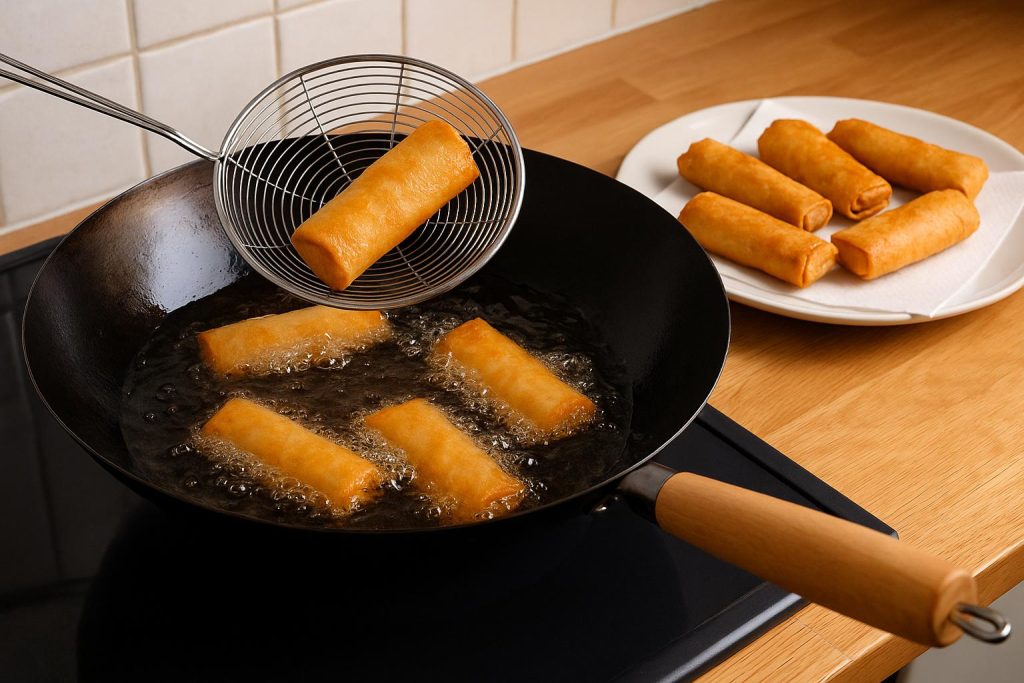
Begin by setting your wok over medium-high heat. Introduce enough vegetable oil to submerge the spring rolls halfway, which typically requires about 1-2 inches of oil in the wok. Gradually heat the oil to approximately 350°F (175°C). This precise temperature is crucial, as it ensures a quick sizzle that crisps the exterior without over-absorbing oil. If a cooking thermometer is unavailable, test the oil by dipping a spring roll edge in; correctly heated oil will sizzle instantly.
Carefully place a few spring rolls into the hot oil, ensuring not to overcrowd the wok as this can destabilize the oil temperature and lead to uneven cooking. Allow each roll to fry for about 4-5 minutes, turning intermittently to achieve an even golden brown color on all sides.
A slotted spoon is ideal for removing the cooked rolls, as it allows excess oil to drain efficiently. Transfer the rolls onto paper towels, where further excess oil can be expelled, ensuring maximum crispiness.
Tips and Considerations
Through the frying process, several considerations and tips can be employed to guarantee success:
– Maintaining a steady oil temperature is vital in ensuring your spring rolls remain perfectly crispy without absorbing an excessive amount of oil, which can render them greasy.
– If you are unfamiliar with traditional woks, practice using a non-stick wok, which may provide easier handling when frying.
– Post-frying, utilizing a warm oven to store the spring rolls can help retain their heat and crispiness if there is a delay in serving.
Conclusion
Crafting delicious spring rolls using a wok is both a satisfying and practical culinary exercise. By focusing on preparation and paying careful attention to the cooking temperatures, you can achieve spring rolls that offer a delightful crunch with every bite. The versatility of spring rolls makes them a perfect option for various gatherings, offering a simple yet flavorful culinary treat. For further skill development and variety in culinary techniques, consider browsing specialized cooking resources, as they can provide excellent insights into perfecting a wide array of dishes.